The Primary Classroom
Montessori Primary Program Guide
For Age: 2-3 Years
Program Insight
We welcome children ages 2 to 3 years into a safe, loving classroom built on the principle of following the child.
During this exciting stage of development, children have a growing desire for order, independence, language, and movement. Our thoughtfully prepared classroom provides a consistent, individualized experience where children feel secure, supported, and encouraged to explore with confidence.
With guidance from caring teachers, children develop new skills through hands-on learning, meaningful experiences, and opportunities to make choices that foster independence and self-confidence.
The Primary Curriculum Sequence
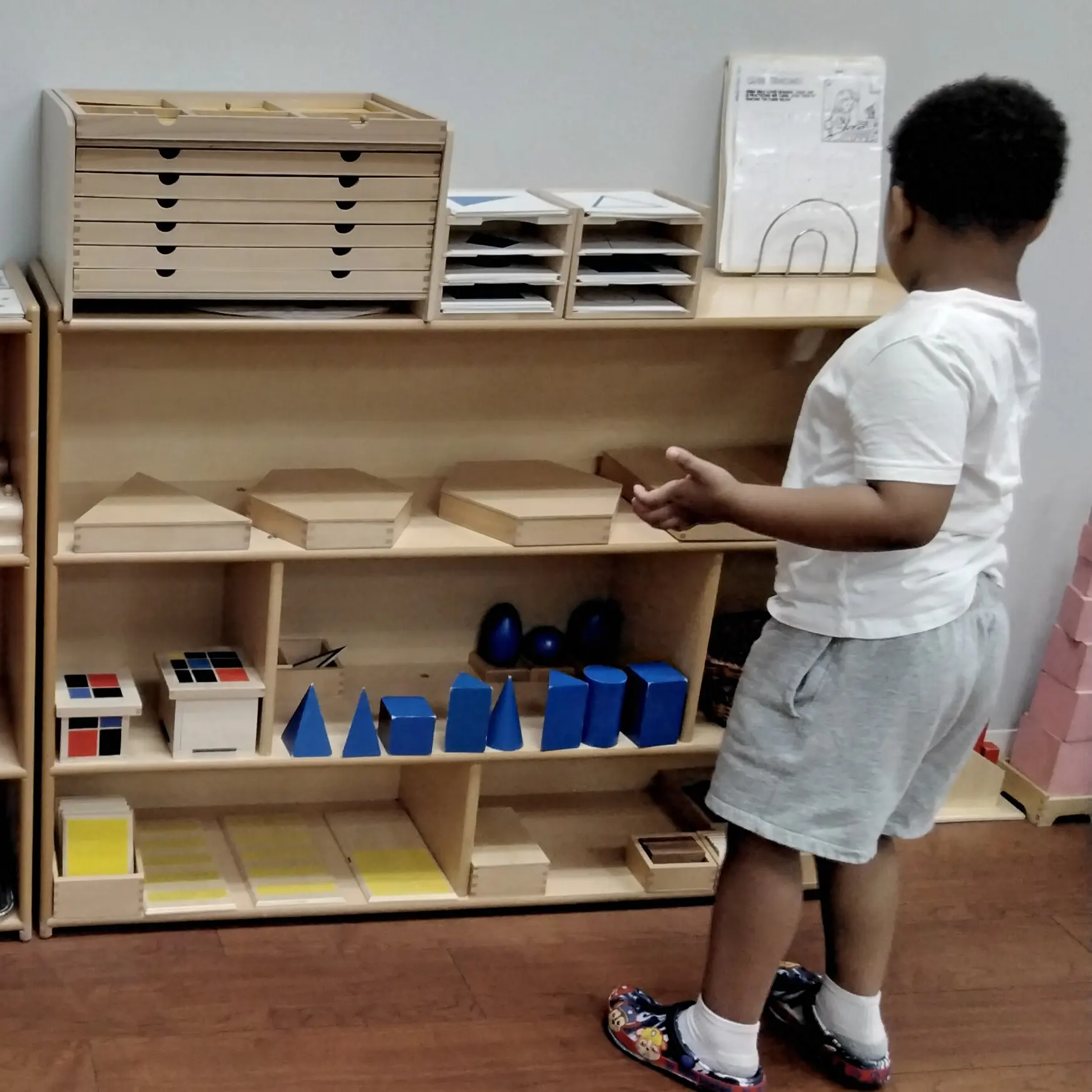
Our classroom features beautiful Montessori materials displayed on low shelves, inviting children to choose meaningful work and explore at their own pace.
The environment is thoughtfully organized around the five core areas of the Montessori Primary Curriculum:
- Practical Life
- Sensorial
- Language
- Mathematics
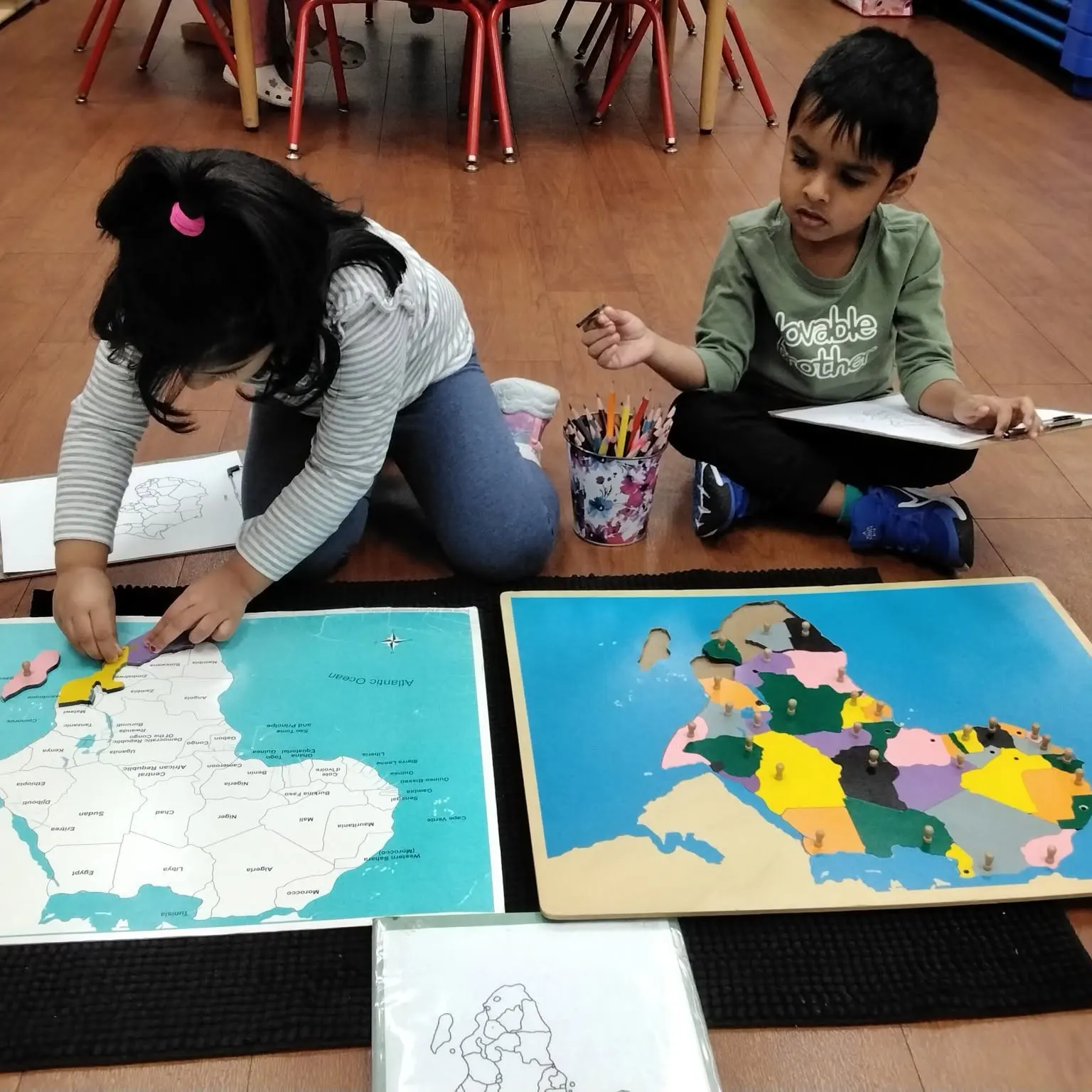
- Cultural studies, including Science and Geography
Each lesson builds upon the previous one, allowing children to strengthen fine motor skills, concentration, problem-solving, and independence while developing a strong academic and social foundation.
Practical Life & Environmental Care
As children grow, they naturally become more interested in caring for themselves and the world around them.
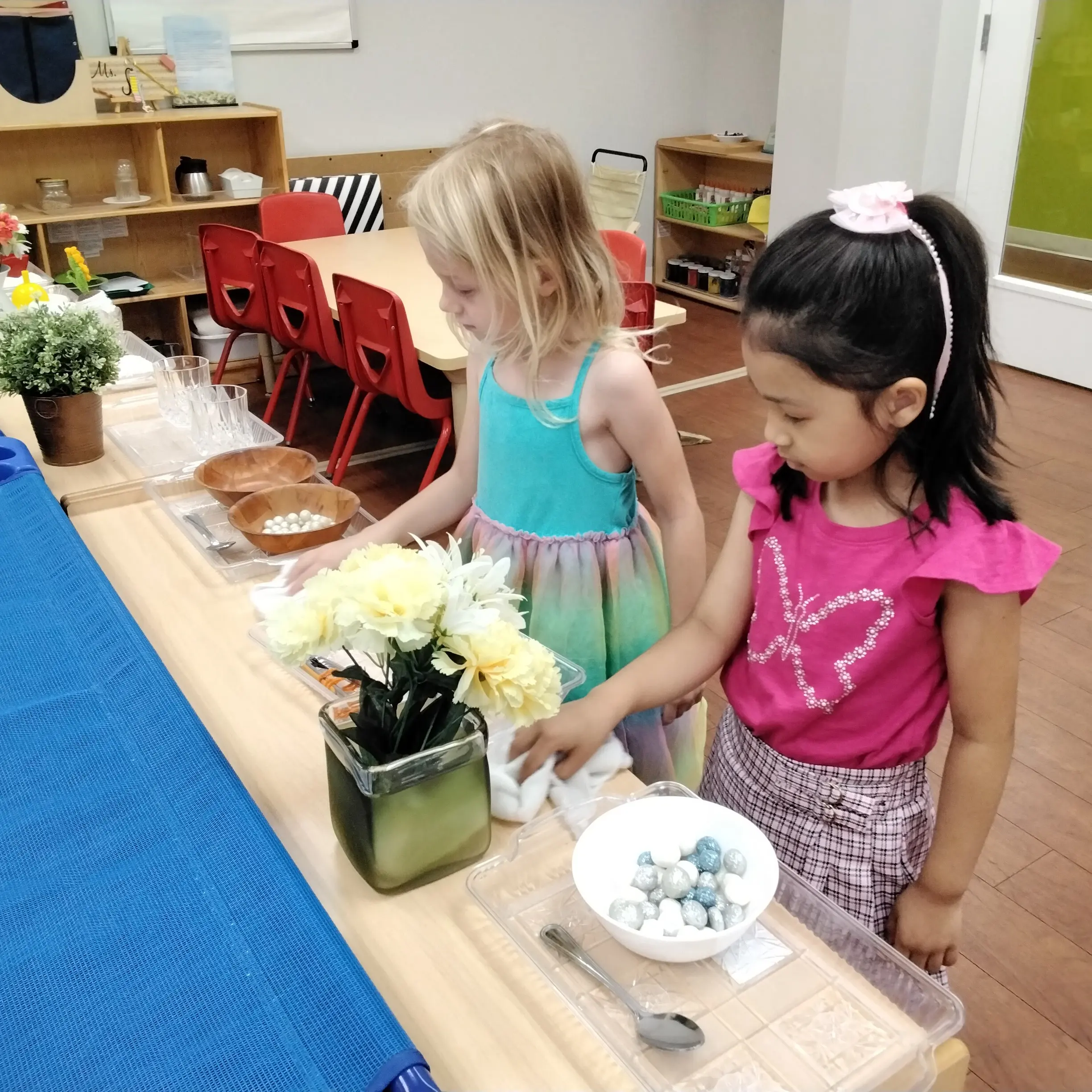
Through Practical Life activities, children learn everyday skills such as putting on coats and shoes, pouring water, pushing in chairs, caring for classroom materials, and arranging flowers to help beautify their environment.
These meaningful activities strengthen coordination, concentration, responsibility, and confidence while helping children take pride in contributing to their classroom community.
Foundational Math & Language Lessons
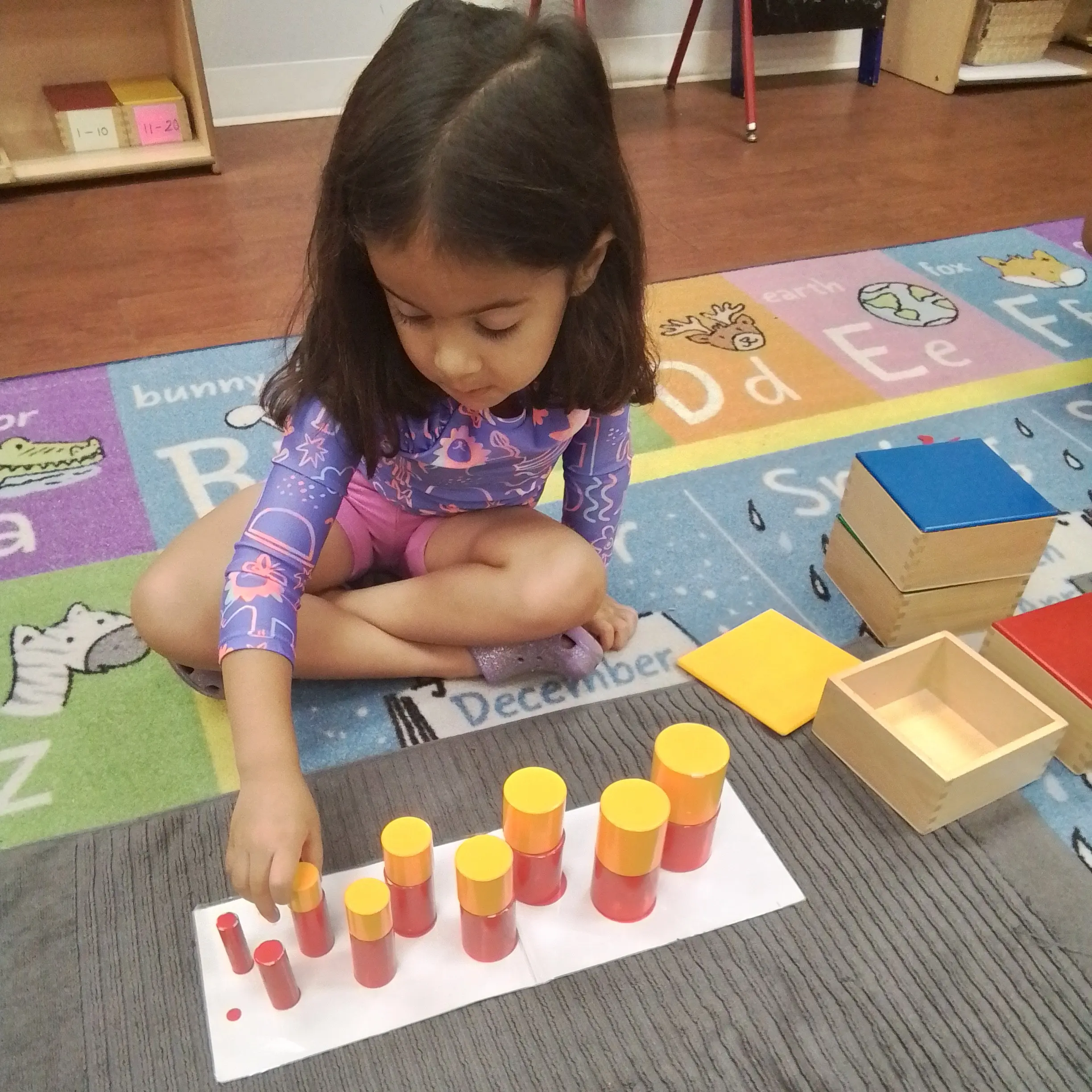
Montessori materials help children experience early mathematics and language concepts through hands-on exploration.
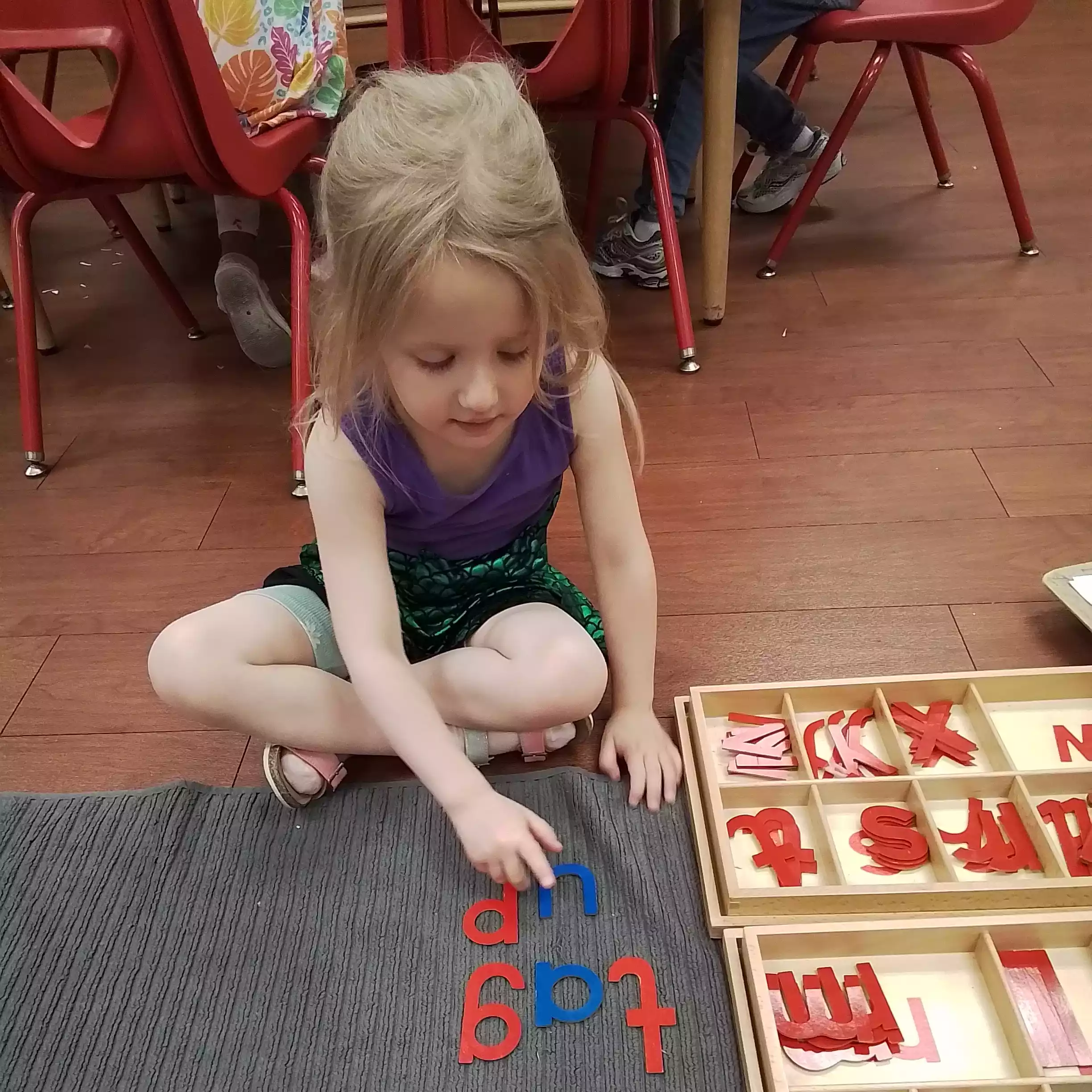
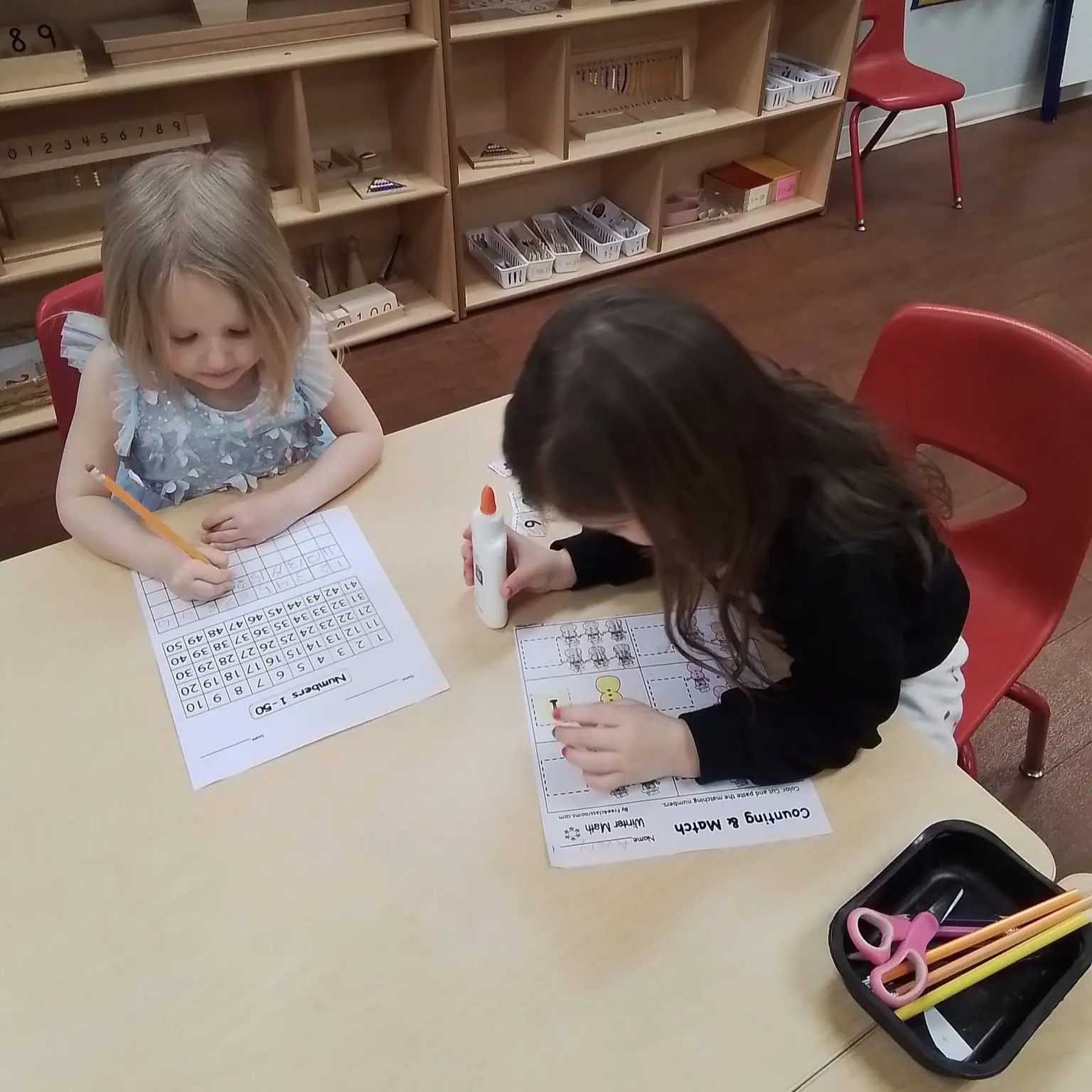
Children engage in activities such as tracing sandpaper letters to connect sounds with symbols, practicing letter formation, writing their names, tracing sandpaper numbers, and using bead materials to build an understanding of quantities and number relationships.
These concrete experiences provide a strong foundation for future reading, writing, mathematical thinking, and problem-solving.
Routine, Trust, and Socialization
A consistent daily routine helps children feel safe, confident, and ready to learn.
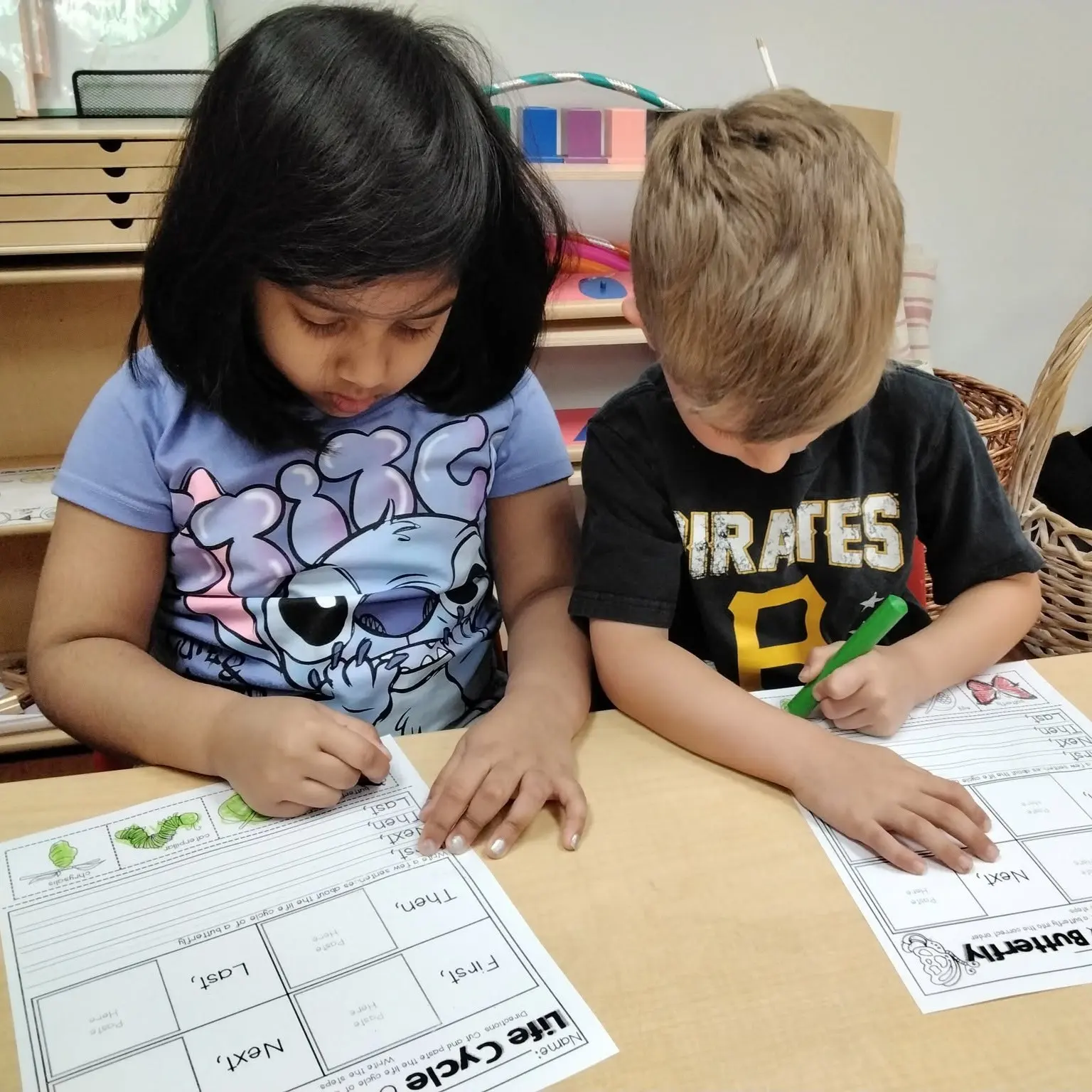
Knowing what to expect allows children to focus on exploration, meaningful work, and building positive relationships with their classmates. As they grow, children naturally move from playing alongside one another to working together, learning to communicate respectfully, solve problems, and cooperate within the classroom community.
These everyday interactions help children develop empathy, patience, and social confidence.
Home and School Partnership
We believe a child’s journey is strongest when families and educators work together.
Our teachers maintain open communication with families, sharing observations, celebrating milestones, and providing guidance that supports learning beyond the classroom. Together, we create a consistent environment where children can continue developing independence, confidence, and a love of learning both at school and at home.
Growing Confident Learners
The Primary years are filled with remarkable growth, curiosity, and discovery.
At Pinebrook Montessori, we provide a carefully prepared environment where children are encouraged to explore their interests, develop meaningful life skills, and build confidence through hands-on learning. Every new accomplishment helps prepare children for the next stage of their Montessori journey while fostering a lifelong love of learning.
What Parents are Saying


FAQ's
Q1. What ages does the Primary Program serve?
A. Children 2 to 3 years old. Children do not need to be potty trained to join.
Q2. What does my child learn in Primary?
A. Children explore the five Montessori areas: Practical Life, Sensorial, Language, Mathematics, and Cultural Studies (science and geography). They learn with hands-on materials and choose their own work from the shelves.
Q3. Will my child start learning letters and numbers?
A. Yes. Children trace sandpaper letters to connect sounds with symbols, practice writing their names, and use bead materials to understand counting and quantity. This concrete foundation comes before worksheets.
Q4. What is "Practical Life," and why does it matter?
A. Practical Life activities are everyday tasks such as pouring water, pushing in chairs, caring for materials, and arranging flowers. They build focus, coordination, and independence, the skills that make later academic learning possible.
Q5. Does my child need to be potty trained?
A. No. If your child isn't potty trained yet, we'll support toilet learning together with you.
Q6. How do children learn to get along with others?
A. A consistent routine helps children feel secure. Teachers guide them from playing side by side to working together: taking turns, using kind words, and solving small conflicts on their own.
Q7. Is there nap or rest time?
A. Yes. Children have a daily rest period after lunch. Children who don't sleep rest quietly on their mats.
Q8.How will I know how my child is progressing?
A. Teachers share observations and milestones throughout the year, along with ideas for supporting learning at home, and meet with you at parent-teacher conferences.
Having trouble viewing the form? Open Ask a Question in a new window.